The Car Organization System for People Who Live Out of Their Car
A car collects clutter for a different reason than a house does — it has no rooms, so nothing has an assigned place to begin with.
A car that gets lived in — school runs, errands, work, the in-between hours of an actual day — collects clutter differently than a house does. A house has rooms, and rooms give things somewhere to belong; a car is one open space with no walls, so nothing has an assigned home unless someone deliberately builds one. That's the actual reason a car reclutters within a week of every cleanout: the cleanout removed the mess but never gave anything a place to go back to.
Why the reclutter cycle keeps happening
Photo by Vitali Adutskevich via Pexels
A typical car cleanout is really just a removal — bags of trash out, loose items into a box, seats vacuumed. It feels like organizing because the car looks better afterward, but nothing about the process decided where a water bottle, a stray shoe, or a return that needs to go back to a store actually lives going forward. Without that decision made in advance, the next item picked up during the day has no obvious spot, so it goes wherever the passenger seat or cupholder happens to be — and the car is cluttered again inside a week.
The three-zone system
Splitting a car into three zones with different jobs fixes this, because it turns "where does this go" into a fast, obvious decision instead of a judgment call every time. The trunk holds equipment and overflow — things needed occasionally but not today. The back seat holds what's in active rotation for the current day or week: kids' bags, a gym bag, groceries in transit. The front cabin — console, door pockets, glovebox — holds only what's needed while actually driving. Nothing gets to skip zones just because it's convenient in the moment.
What actually belongs in the trunk
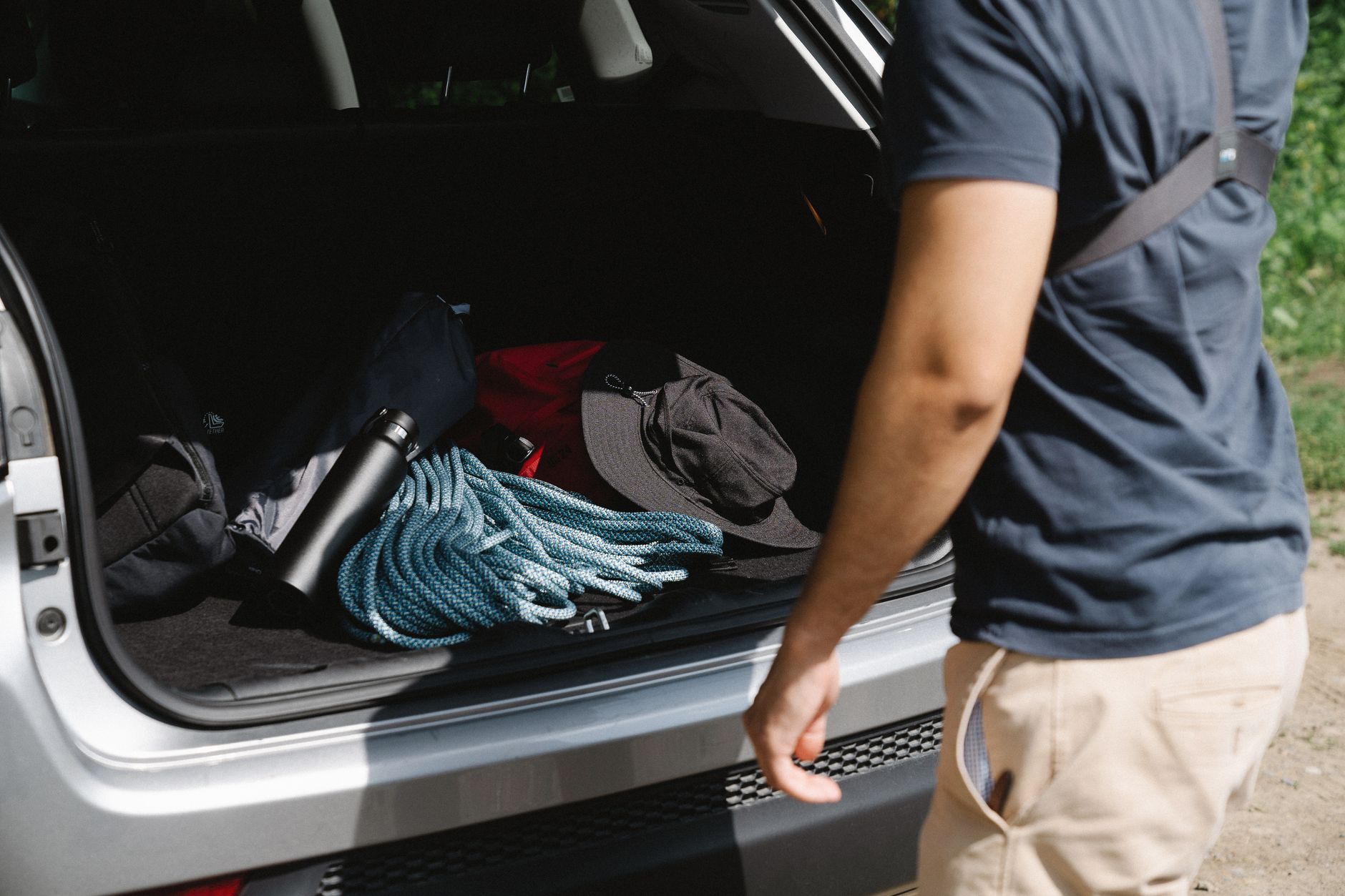 Photo by Katya Wolf via Pexels
The trunk works best divided into two or three labeled bins rather than left as open floor space, since open space is exactly what turns into a dumping ground. A reasonable split: an emergency/utility bin (jumper cables, blanket, basic tools), a kids'-or-activity bin if relevant (sports gear, an extra jacket), and a rotating "returns and drop-offs" bin for anything that needs to leave the car at its next stop — library books, dry cleaning, donations. That last bin is the one that actually prevents the trunk from filling with things that were "going to get dropped off eventually."
The back seat is for today, not for storage
The back seat is the zone most likely to quietly become storage, because it's easy to set something down there "just for now." Treating it as strictly for the current day or trip — the diaper bag in active use, today's grocery run, the jacket that came off ten minutes ago — keeps it from becoming a second trunk. Anything that's been sitting on the back seat for more than a couple of days without being touched has effectively become storage and belongs in a trunk bin or back in the house.
- A car reclutters fast after a cleanout because nothing was assigned a permanent zone — the mess was removed, not prevented.
- Splitting the car into three zones (trunk, back seat, front cabin) turns "where does this go" into a fast decision instead of a judgment call.
- A labeled "returns and drop-offs" trunk bin is what actually stops errands from piling up loose in the back seat.
The console, door pockets, and glovebox
 Photo by Dextar Studio ™ via Pexels
The front cabin has the least space and the highest traffic, so it's where clutter is most visible even in small amounts. Reserving the console for only what's used while driving — phone mount, sunglasses, a card for tolls or parking — and the glovebox for documents and genuine emergencies keeps this zone from filling with receipts, old parking passes, and loose coins. Door pockets work well for one category each (one side for trash bags and a scraper, the other for a phone charger and napkins) rather than becoming a mixed catch-all.
The five-minute weekly reset
 Photo by Khunkorn Laowisit via Pexels
The system holds because of a short weekly pass, not because it's set up once and left alone. Once a week — pumping gas or waiting to pick someone up works fine — pull anything that drifted out of its zone back to where it belongs: trash out, back-seat items either used up or moved to the trunk bin, drop-offs actually dropped off. Five minutes done weekly prevents the two-hour deep clean that a fully neglected car eventually demands.
What to skip
Generic "car organizer" kits bought without a specific zone in mind tend to become extra containers with nothing assigned to them — which is the same problem as an unlabeled bin. A hanging trunk organizer or seat-back pocket is only worth adding once there's a specific category it's meant to hold; bought first and assigned a purpose later, it just becomes one more place clutter can spread into.
Frequently asked questions
Why does my car get cluttered again so fast after I clean it out?
Because a cleanout removes the clutter without giving anything a permanent place to go back to. Without a zone assigned to each category — trunk, back seat, cabin — the next stray item has nowhere obvious to land, so it just sits wherever it was set down, and clutter rebuilds from there.
What's the best way to organize a car you spend a lot of time in?
A three-zone system: a fixed-location trunk for equipment and overflow, a back seat limited to what's in active use that day, and a front cabin reserved for only what's needed while actually driving. Each zone has a job, so an item's location tells you whether it belongs there.
Do car organizer bins and seat-back organizers actually help?
Only if they're assigned to a specific category rather than used as general catch-alls. A bin labeled for one thing (kids' gear, emergency supplies, returns) stays useful indefinitely; an unlabeled bin for 'car stuff' turns into a second glovebox within a month.
How often does a car need a full organization reset?
A five-minute end-of-week pass — pulling loose items back into their zone — is enough to prevent the need for a full reset. Cars that only get cleaned out when they're already overwhelming tend to stay that way, because there's no small, repeatable habit keeping the system current.