The One Closet System That Works in a House With No Walk-In
Reach-in closets fail for a specific reason — most organizing systems are designed for a room you step into, not a six-foot gap between two walls.
A reach-in closet gets blamed for being small, but the actual problem is usually the system inside it, not the square footage. Most closet advice is written for a walk-in — a room you step into — and a huge share of it simply doesn't translate to a closet that's one wall, one door, and roughly two feet of depth. The fix isn't more storage. It's a layout built for the shape you actually have.
Why walk-in systems fail in a reach-in closet
Photo by cottonbro studio via Pexels
Walk-in systems are built around floor space — an island, a bench, shelving on three walls you can circle. A reach-in closet has none of that. Everything has to live on one wall, accessed from a single doorway, which means the vertical dimension is doing all the work a walk-in would spread across a whole room. A system copied from a walk-in tends to put too much weight on one rod at one height and leaves the space above and below it empty.
The single change that matters most: double-hang
One full-length rod, hung at a standard height, uses maybe half the vertical space available in most closets — there's usually 18 to 24 inches of dead air below a full-length dress or coat, and most of what people actually hang (shirts, folded-length pants, jackets) doesn't need that much drop. Splitting that one rod into two shorter rods, stacked one above the other, roughly doubles hanging capacity in the exact same width. The upper rod holds shirts and folded pants; the lower rod holds the same. Full-length items — dresses, robes, long coats — get their own single-rod section at one end instead of dictating the height of the entire closet.
Building zones instead of one long rod
 Photo by Atlantic Ambience via Pexels
Instead of one continuous rod holding everything from work shirts to gym clothes in whatever order they landed, dividing the closet into a small number of fixed zones makes the space actually navigable. A typical layout: double-hang for tops and folded-length bottoms on one side, single full-length hang for dresses and outerwear on the other, and a shelf or bin column at one end for anything that doesn't hang well at all — sweaters, folded knits, bags. The zones don't need to be equal width. They need to match how much of each category actually exists in the closet.
Using the vertical space a rod can't reach
The area above the top rod and below the bottom one is usually the most wasted real estate in a reach-in closet. A shelf running the full width above the top rod holds bins for out-of-rotation items — a genuinely useful spot for the off-season zone below. Below the bottom rod, stackable bins or a low shelf hold shoes or folded items far better than the floor does, where things end up in a pile that has to be dug through rather than seen at a glance.
- Splitting one full-length rod into two stacked shorter rods roughly doubles usable hanging space in the same width.
- Zones sized to what you actually own — not equal thirds — make a small closet easier to navigate than a bigger one with no structure.
- The space above the top rod and below the bottom one is where most reach-in closets lose the most usable storage.
Where storage bins actually earn their space
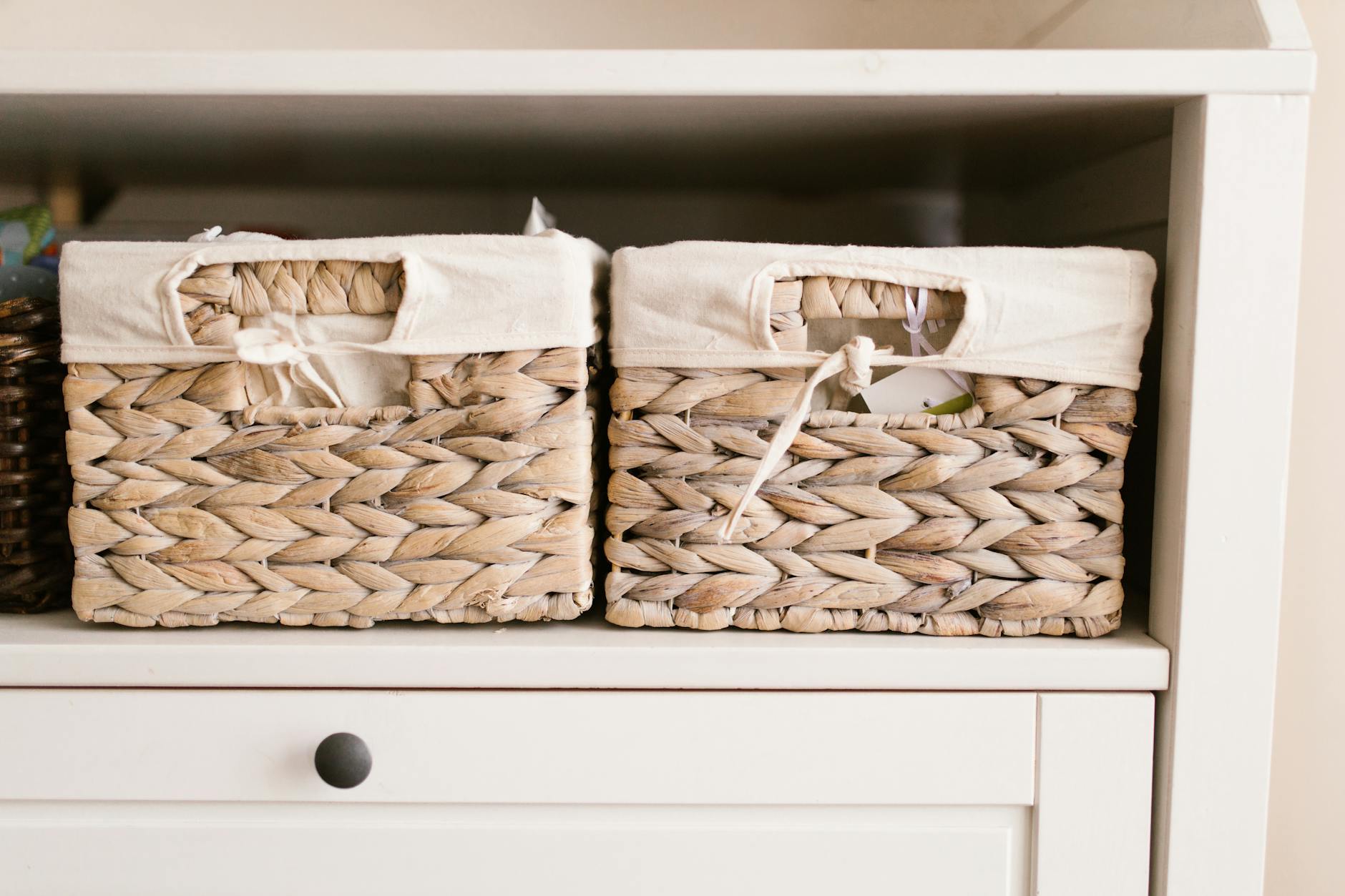 Photo by RDNE Stock project via Pexels
Bins work best for categories that don't hang well and don't need to be seen individually — folded sweaters, scarves, workout clothes, off-season items. A bin holding a mix of unrelated things (a few sweaters, a spare charger, an old scarf) becomes a place things disappear into rather than a system. One bin, one category, labeled if the closet is shared, is the rule that keeps bins from becoming the closet's junk drawer.
The off-season rotation that keeps the system working
A reach-in closet has no room to hold a full year's wardrobe at once and stay usable — the fix is a dedicated off-season zone (a bin, a shelf, or the far end of the rod) rather than leaving winter coats and summer dresses mixed together year-round. Twice a year, swapping what's in that zone with what's currently on the main rods keeps the everyday sections from getting crowded with things that aren't in rotation. It's a five-minute swap twice a year instead of a permanent squeeze on the closet's everyday space.
What to skip
 Photo by Waldemar Brandt via Pexels
Corner shelving units and closet islands, both staples of walk-in organizing content, generally don't fit a reach-in closet's depth and just eat into hanging space without adding real storage. Over-the-door organizers are the other common miss — useful for shoes or accessories in some cases, but easy to overload past what the door hardware can support, and they add clutter to the one visual line (the closet door, closed) that's supposed to make a small space look tidier than it is.
Setting it up in an afternoon
Measuring the actual width and depth before buying anything is the step most people skip, and it's the one that prevents buying a kit sized for a bigger closet than the one being organized. From there: install the double-hang rods first, add the top shelf, sort clothes into the zones by category rather than by outfit, and set aside the off-season items for their bin before anything goes back on a hanger. Most of the actual work is sorting, not building — the physical system just gives the sorted categories somewhere consistent to live.
Frequently asked questions
What counts as a reach-in closet?
Typically a closet 4 to 8 feet wide and about 24 inches deep, with a single opening you access from outside rather than a room you step into. That fixed depth is what makes walk-in-style systems a poor fit — there's no room to walk around a center island or angle a bench.
What is the best way to organize a small reach-in closet?
Double-hang zones (two shortened rods stacked instead of one full-length rod) combined with dedicated zones for each category of item, rather than one continuous rod holding everything at one height. This roughly doubles usable hanging space in the same footprint.
Do closet organizer kits work for reach-in closets?
Generic kits sized for a walk-in's floor space often waste depth in a reach-in closet, where every inch of the single wall matters more. A kit measured against your closet's actual width and depth — not a photo of someone else's larger closet — is what actually fits.
How often should off-season clothes be rotated out of a small closet?
Twice a year, at the seasonal switch, is enough for most climates. Rotating more often usually means the closet was set up without a dedicated off-season zone in the first place.